Nature and Wildlife
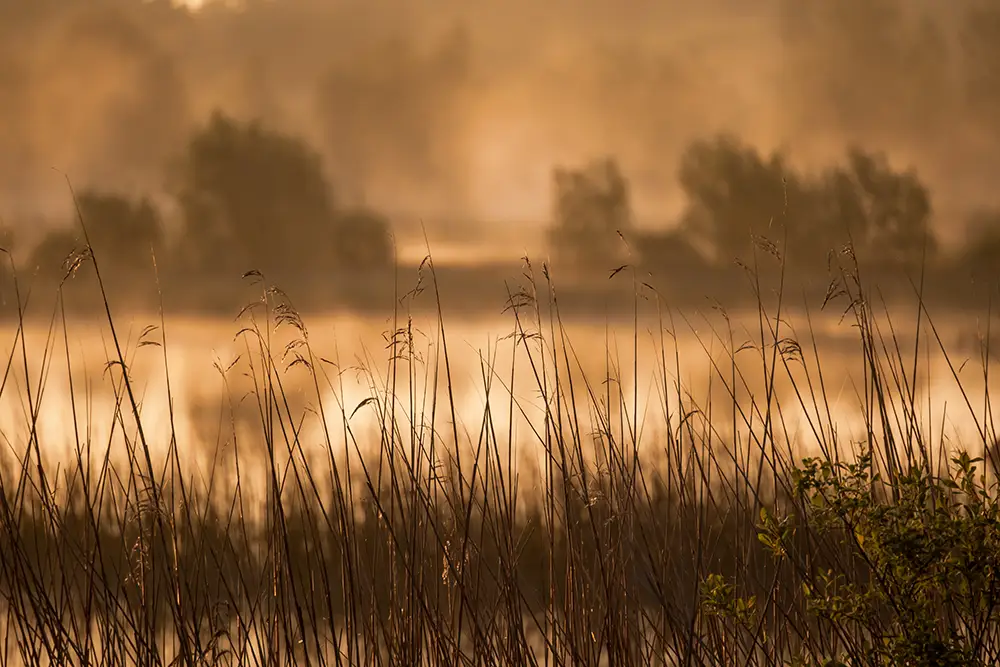
Lough Boora Discovery Park is a beautiful landscape at the centre of Ireland – a paradise for outdoor enthusiasts. The regenerating power of nature, with a little help from the caring hands of humans, has turned Lough Boora from a peat-harvesting site to a spectacular haven for animals, birds and plants.
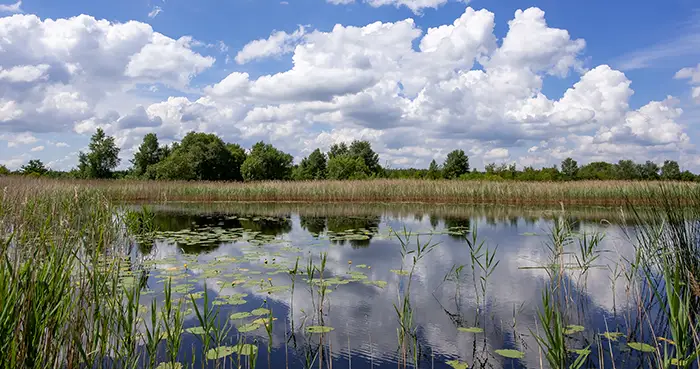
A magnificent collection of natural and manmade lakes, wetlands and woodland areas, the park’s 50km of trails enable you to experience and appreciate the amenities, flora and wildlife in full.
The Flora & Wildlife
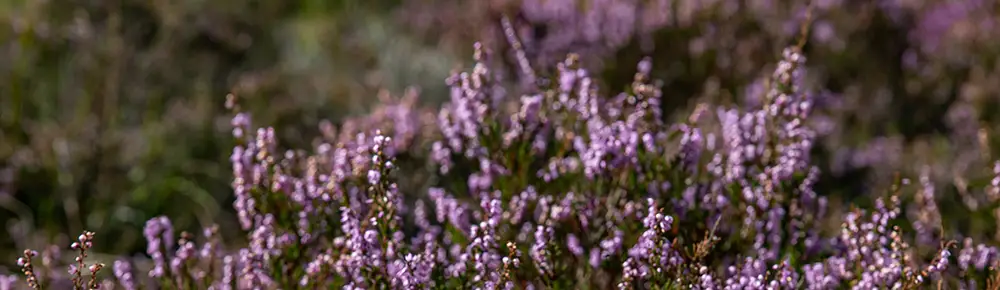
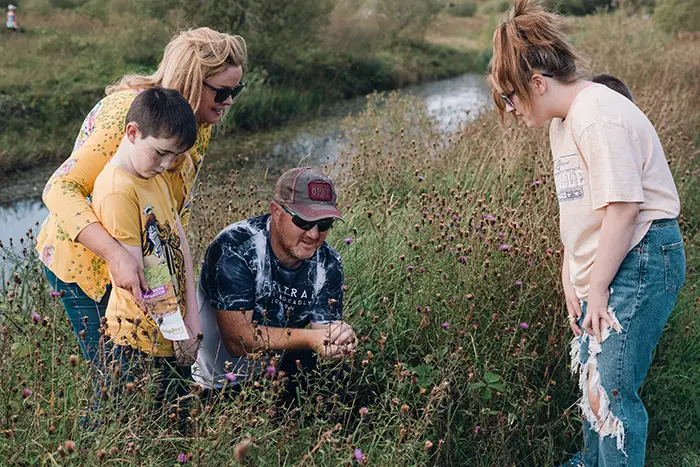
Rushes are often the first species to colonise bare peat and are one of the most common plants found in Lough Boora. However, in some areas it is quickly succeeded by other species such as Purple Moor-grass, Devil’s-bit Scabious, Wild Carrot and Heath Groundsel. At Turraun Wetland, the oldest site in the park, these grasslands often develop into rich wildflower meadows where orchids such as the Common Spotted, Bee, Early Purple Fragrant and Marsh Helleborine can be found.
Large areas of the park have developed into naturally regenerating open woodlands, predominantly made up of Downy Birch and Willow, with some Rowan and recolonising Scots Pine also present. Meanwhile, Bent Grass, Hard Fern, Bramble and Raspberry are found among the trees.
The site’s wetlands are characterised by species such as; Bog Cotton, Water Mint, Water Horsetail, Phragmites Reeds, Bulrush, Marsh Arrowgrass and Marsh-bedstraw. The natural wetlands at Finnamore Lakes are of special significance as some areas are dominated by Fen species such as: Blunt-flowered or Fen Rush, Yellow Sedges, Marsh Cinquefoil and Bog Thistle.
Please remember to respect the nature and conservation value of Lough Boora Discovery Park.
Encounter some of Ireland’s threatened wildlife species at Lough Boora Discovery Park, including the native Grey Partridge and impressive numbers of migrant birds who make their home in the park. A range of common, obscure and nocturnal mammals can appear in plain sight at a moment’s notice if you’re lucky enough to spot them!
Listen for the periodic sounds of our local amphibians and the fleeting hum and buzz of busy insects. The park is a natural treasure of living species waiting to be explored and appreciated.
 Birds
Birds
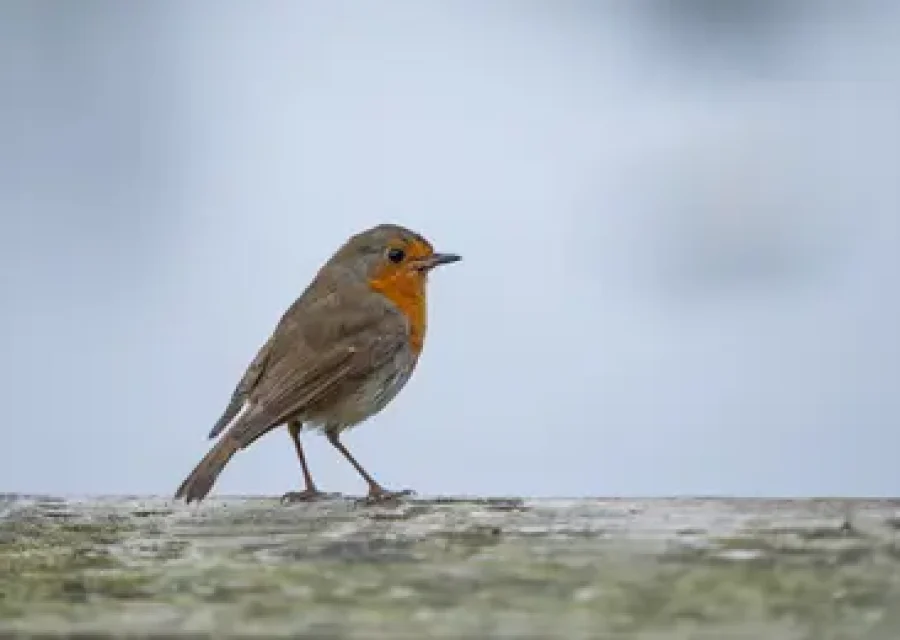
Avid wildlife and outdoor enthusiasts can view some of the over 130 species of resident and migrant birds from the park’s bird watching hides. Areas of Lough Boora Discovery Park are also home to the last remaining population of native Grey Partridge, one of Ireland’s most threatened breeding birds.
Mammals
The park contains Nationally and Internationally Important Species, including the common Irish Hare, which can be spotted in large numbers. Nocturnal Badgers and Bats rarely leave evidence of their activity, while the timid Deer and herds of wild Goats keep to the grasslands and conifer forestry.
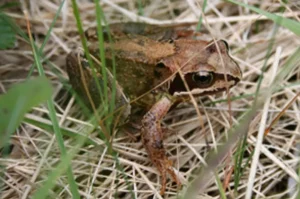 Amphibians and Reptiles
These cold-blooded species can be found in the park’s lakes and wetlands, preferring to keep to aquatic areas. Listen for Frogs as they sound their croaks, ribbits and splashes throughout our local waterways.
Invertebrates
The park is a flutter of activity each spring and summer, with the local Straw Underwing Moth, Black-tailed Skimmer and Keeled Skimmer Dragonflies, Common Darter and Branded Damselfly. The Brimstone Butterfly emerges from winter hibernation in spring and migrant species of Butterflies start to arrive in the park from southern Europe in the summer.
The Lakes
Boora Lake
Boora Lake
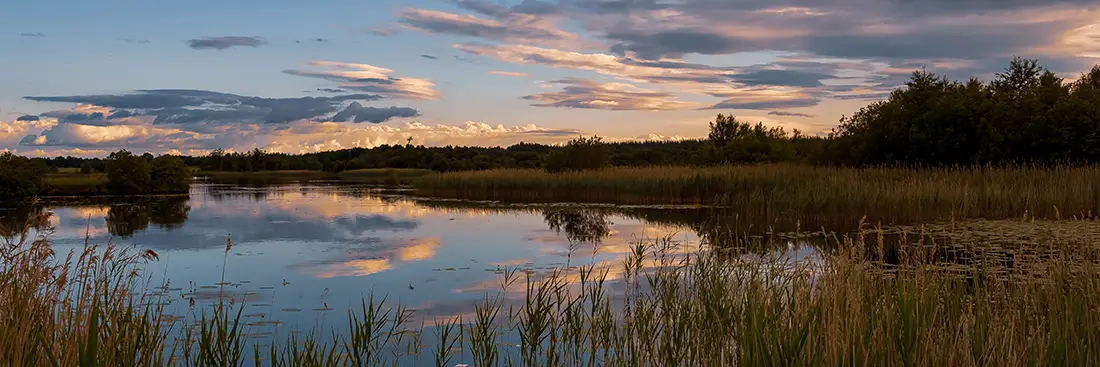
This family-friendly amenity is an ideal space for all ages to interact with Lough Boora’s wildlife and encounter ancient flora that has been preserved in the bog for thousands of years.
Boora Lake is first and foremost an angling lake, stocked with coarse fish. There is also an area where families can feed the birds, providing an excellent opportunity for children and adults to view our resident and migrant species up close.
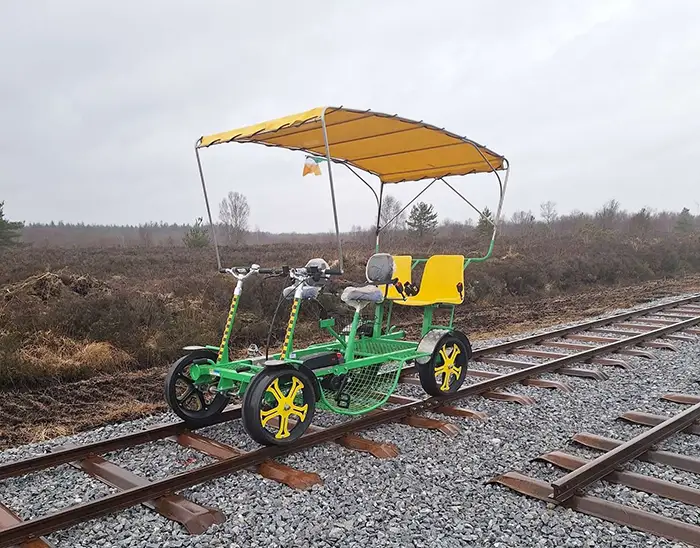
Part of the Boora Lake walk follows an old railway embankment around the lake and makes for an unconventional outdoor footpath. Its elevated position provides visitors with excellent views of Boora Lake and Leabeg Wetland at different locations.
Examples of ancient oak, yew and pine trunks that were preserved in the bog for thousands of years are displayed in the car park opposite the thatched bird hide. You will also find a granite “erratic” which was carried into the area by glaciers during the last ice age and deposited as they retreated, alongside a limestone boulder containing many fossils.
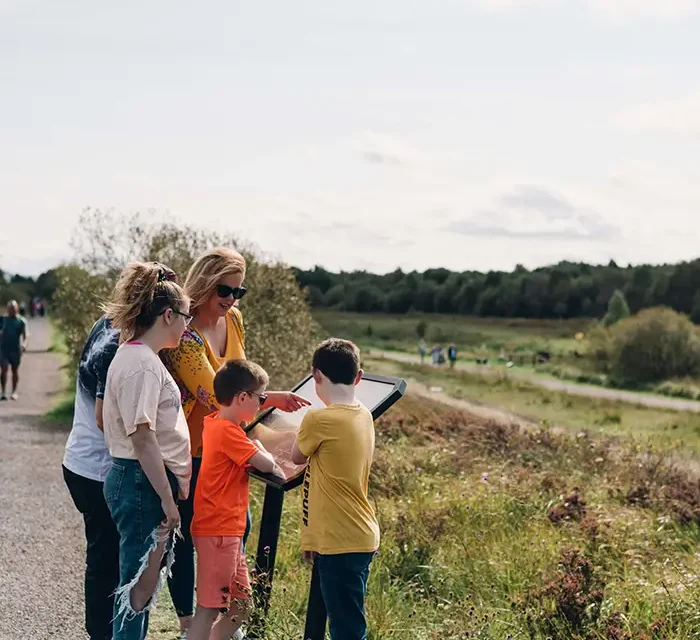
The start of the Leabeg, Mesolithic and Boora Lake walks are located in the car park. Picnic areas and information boards, are located on site.
Boora Lake is located adjacent to Loch an Dochais and is situated on the right (west) of the Cycle Path road, which links the Boora road (R357) to the N52 Kilcormac road.
Please remember to respect the nature and conservation interests of Lough Boora Discovery Park.
Loch an Dochais
Loch an Dochais
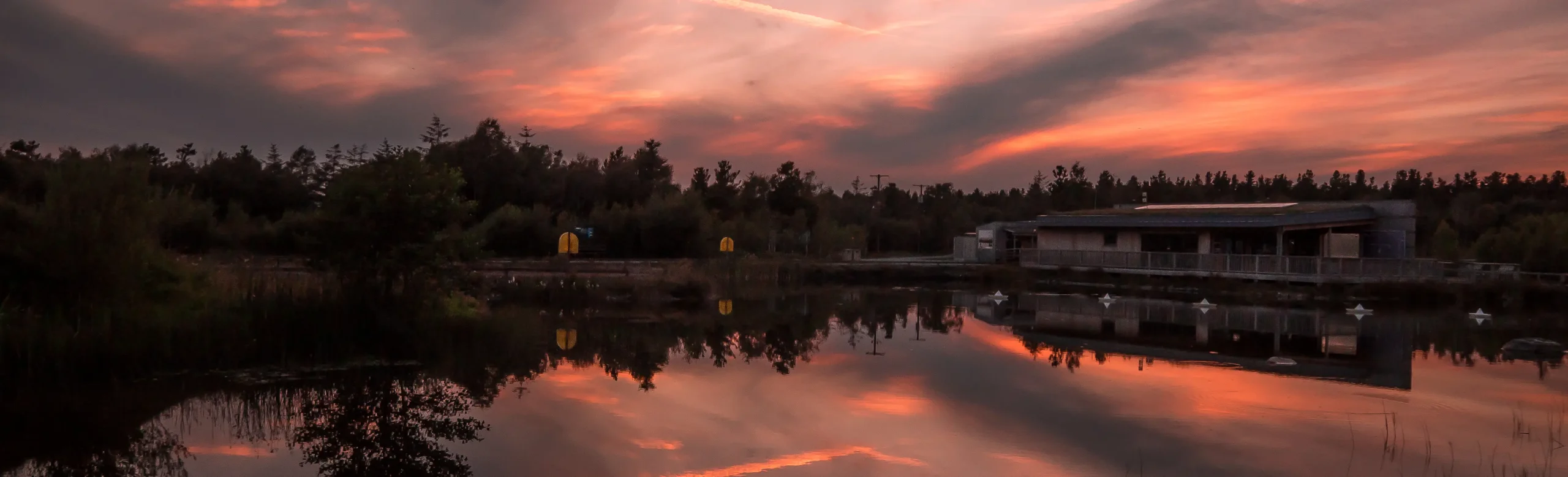
Loch an Dochais, meaning ‘Lake of Hope’, was developed as a small angling lake with facilities for all ages and abilities.
The ‘Lake of Hope’ is just under a hectare in size and has a maximum depth of two metres.
With all the appearance of a natural lake, Loch an Dochais hosts the All Ireland Competition for disabled anglers each year. An exceptional coarse fishing lake, it has proven popular and is an excellent site for families and for teaching children to fish.
On site picnic and parking facilities are provided which also serve the Tumduff Walk. Loch an Dochais is the first lake you meet to the right (west) of the Cycle Path road when travelling south from the R357 towards Kilcormac.
Please remember to respect the nature and conservation value of Lough Boora Discovery Park.
Finnamore Lakes
Finnamore Lakes
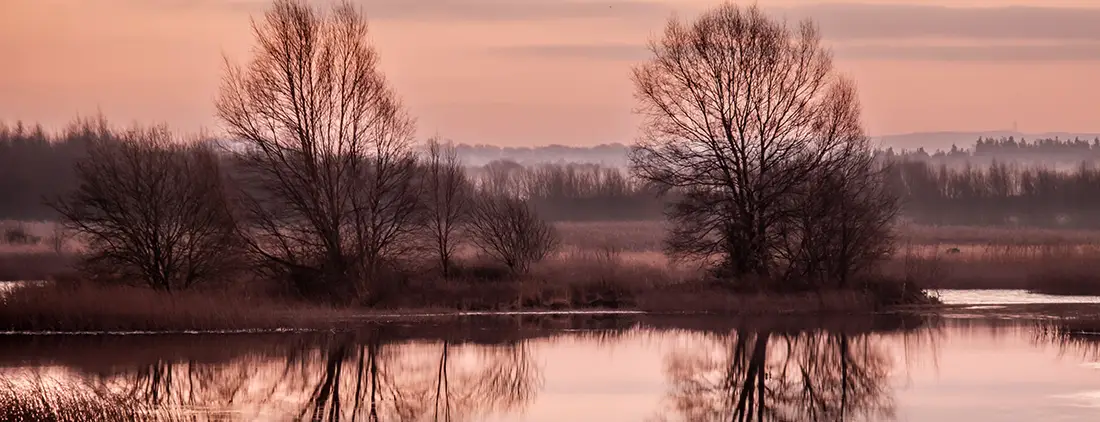
The Upper and Lower Lakes at Finnamore’s offer something for everyone, with active anglers, walkers and nature enthusiasts enjoying this breathtaking expanse.
Set against the spectacular backdrop of the Slieve Bloom Mountains, Finnamore Lakes has something to offer everyone. From the active enthusiast to the keen nature observer, the peaceful and diverse surrounds of the park are reflected off Finnamore Upper and Lower Lakes.
Anglers will enjoy the 30 hectare site’s two lakes, developed in 1996 and stocked with Carp, Trench, Rudd and Bream. Located alongside the R357, with excellent parking facilities, the lakes are popular with local and visiting anglers.
For the naturalist, the site contains two natural wetland areas located to the east of the lakes. The first has flooded part of a failed Sitka Spruce plantation, inundated by water and wetland flora, and is a fitting reminder of how the great lowland bogs developed. The wetland is characterised by fen species such as Fen Pondweed and Blunt-flowered Rush. The wetlands attract breeding species such as Lapwing and Redshank and occasionally rare vagrants such as the Black-winged Stilt are known to visit.
Whether wandering off the beaten track to take a closer look at the beauty of these natural wetlands, or following the rough walking path around Finnamore Lower, this site offers several pleasant short walks. Picnic tables and information boards are located on site.
Finnamore Lakes consists of Finnamore Upper (nearest to R357) and Lower. They are situated 16 km to the west of Tullamore on the right (south) of the R357 Boora road, which links Cloghan village to the N52 at Blue Ball.
Please remember to respect the nature and conservation interests of Lough Boora Discovery Park.
Loch Clochan
Loch Clochan
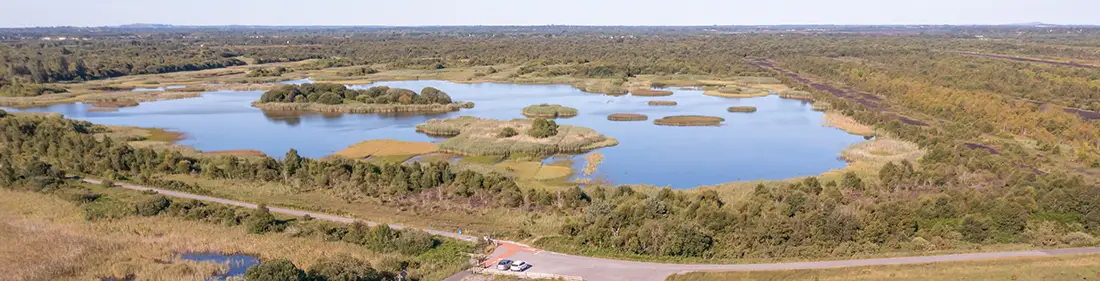
Fly-fish in Loch Clochan or simply enjoy the natural surrounds, with access to a walking path and picnic areas on site.
Cloghan Wetland is a 55 hectare site comprising of an angling lake – Loch Clochan, several natural ponds and wetlands, open birch-willow woodland, grassland and naturally recolonising Scots Pine.
Loch Clochan is a four hectare angling lake that was developed and stocked with Rainbow Trout, with fly-fishing permitted on the lake on a ‘put and take’ basis by Cloghan Angling Club. Permits are available from Daley’s Londis Supermarket in Cloghan – details of open season and restrictions can be found on the Angling Club information board located in the car park.
The site is also a nice location for a tranquil walk, with a 3.5km pathway taking you around the lake, along the wetlands and through the open birch-willow woodland. Parking facilities, picnic areas and information boards are located on site.
Loch Clochan is situated 2km from Cloghan village on the left (north) of the R357.
Please remember to respect the nature and conservation interests of Lough Boora Discovery Park.
The Bird Hides
Tumduff Mór
Tumduff Mór
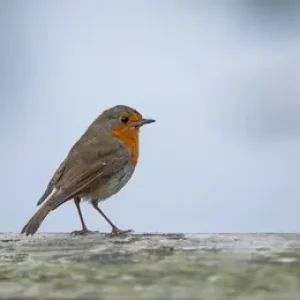 Tumduff Mór is a haven for bird watchers and active enthusiasts alike, with a bird hide and access to the Tumduff Walk, this scenic trail takes you on a short 1.5km tour of the site.
Tumduff Mór is accessed by following the Cycle Path road south past the thatched bird hide and taking the next access road on the left (turning east). After approximately one mile, a right turn (eastwards) before the railway track will lead you to the Tumduff Mór bird hide, accessible by foot.
For the more active enthusiast, the hide can be accessed by taking the Tumduff Walk, which begins opposite Loch an Dochais. This trail, with its pleasant and varying scenery, is approximately 1.5km and is an ideal way to access the site.
At the entrance to Tumduff you may notice the airfield of the model aeroplane club. A local club, it makes for an interesting spectacle on Sunday afternoons, weather permitting.
Please remember to respect the nature and conservation interests of Lough Boora Discovery Park.
Tumduff Beag
Tumduff Beag
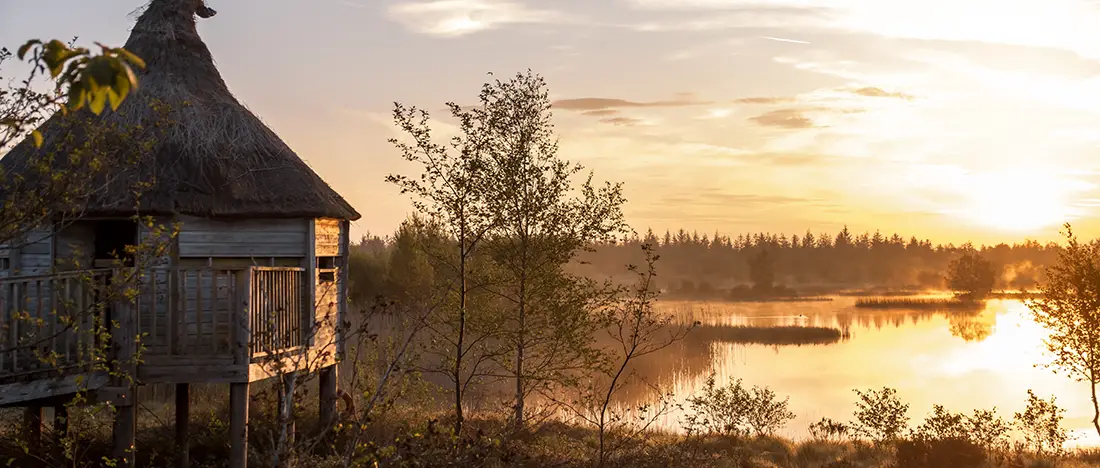
Tumduff Beag boasts a magnificent raised bird-hide for all ages and abilities with a traditional reed thatched roof, providing an ideal vantage point to view local and migrant birds.
Tumduff Beag boasts a magnificent raised bird hide for all ages and abilities; its traditional reed thatched roof complements the site’s aesthetic qualities. Wheelchair accessible, the hide provides an excellent vantage point from which to view birds such as the Grebe, Tufted Duck, Mallard, Moor Hen, Lapwing and Black-headed Gulls.
To promote and aid the breeding of these birds a number of nesting shelters have been provided.
The Tumduff Walk begins at the northern end of Tumduff Beag and runs alongside the tracks of a disused railway line. Whether simply partaking in a leisurely stroll, or seeking a new vantage point from which to view the birds, the path serves to include the visitor in this wetland that is characteristic of Lough Boora Discovery Park.
Parking for Tumduff Lake is provided in the Boora Lake car park, directly opposite the bird hide, or in the car park at Loch an Dochais.
Tumduff Beag is located directly on the left (east) of the Cycle Path road that links the Boora (R357) road to the Kilcormac N52 road.
Please remember to respect the nature and conservation interests of Lough Boora Discovery Park.
The Wetlands
Turraun Wetland
Turraun Wetland
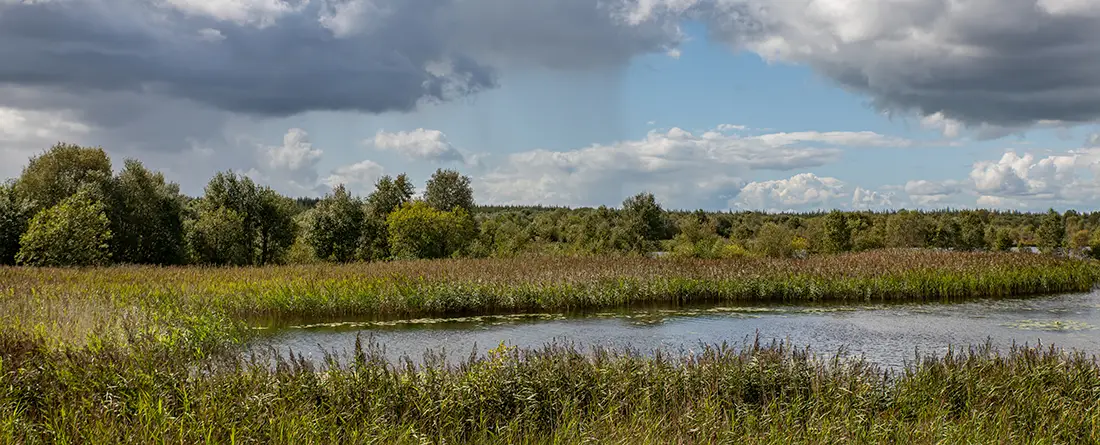
Take a walk through the oldest wetland in the park, exploring the most diverse range of species in Lough Boora at Turraun Wetland.
Turraun Wetland is an expansive, wild, open plan site rich in natural beauty and diversity. The first area to come out of commercial peat production, this 144 hectare site is the most species diverse of all Lough Boora’s sites. Over 60 hectares were flooded in 1991 making Turraun the oldest wetland in the park.
With over 110 bird species and 270 vascular plant species, ranging from trees to reeds, heathers to grasses, Turraun is an ideal location in which to pursue an interest in natural history, or to enjoy a pleasant and relaxing walk. A looped walk through Turraun along a rough track (wet in places) takes you to Cocta Hill, which is covered with orchids and other wild flowers during the summer.
Renowned for its summer wildflower displays, autumn colours and abundance of wild orchids – which peak during June and July, Turraun provides a good opportunity to experience both the wilderness and beauty of Lough Boora.
Walk through Turraun into Pollagh to view this historical bog village and stop by the church, which is well-known for its spectacular bog oak altar.
Turraun is situated off the R357 Boora road, which links Cloghan village to the Tullamore road (N52) at Blue Ball and is accessible by turning north along the gravel road beside Boora Church, opposite the turnoff to the Boora Works and Lough Boora site. The access route continues on through the site into Pollagh village. Do not cross the canal. Taking the Rahan road out of the village and the first right off this road will take you back onto the R357.
Please remember to respect the nature and conservation interests of Lough Boora Discovery Park.
Leabeg Wetland
Leabeg Wetland
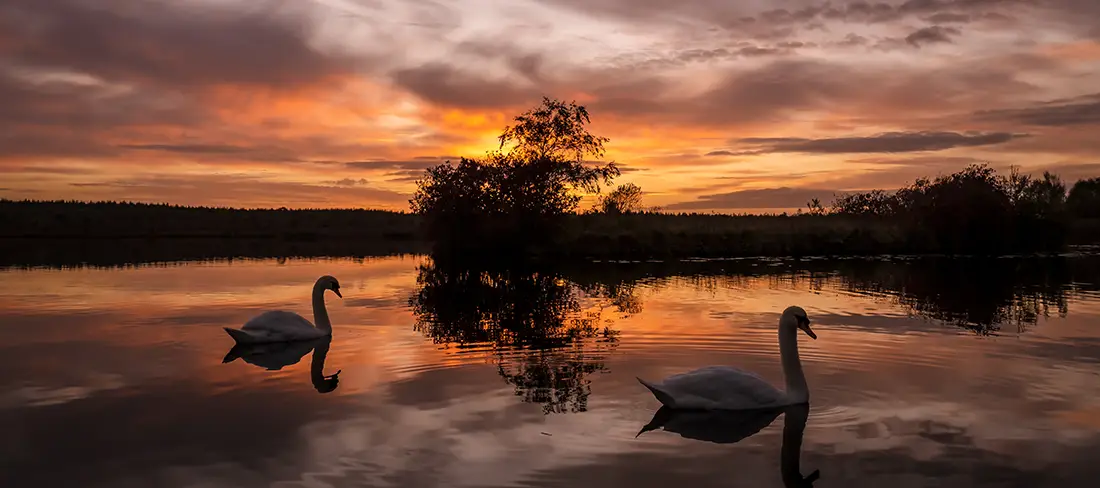
Visit this feeding ground for migratory Whooper Swans as they flock south for winter to Leabeg Wetland’s partially flooded site.
Leabeg Wetland offers a rare chance to observe and photograph the large flocks of Whooper Swans arriving from Iceland to congregate there each winter.
The site was developed by blocking underground drainage pipes and has since partially flooded each winter. This flooding provides excellent feeding grounds for swans over-wintering in Ireland and Leabeg is now a site of National Importance for Whoopers, attracting up to 150 birds during the cooler months. Leabeg Wetland is located north-west of Boora Lake, which is situated to the right (west) of the Cycle Path road that links the Boora road (R357), to the N52 Kilcormac road.
The site can be accessed by following the beginning of the Mesolithic Route. Start in the car park opposite the thatched bird hide and turn right after the railway embankment. A walkway runs alongside the canal, known as the canoe course, from which a number of birds may be seen.
Please remember to respect the nature and conservation interests of Lough Boora Discovery Park.
Drinagh Wetland
Drinagh Wetland
Natural recolonisation is currently taking shape in the Drinagh Wetland, with large numbers of birds visiting Lough Boora’s largest and most recent addition to the park.
Drinagh Wetland is the largest and most recent addition to Lough Boora. It is 267 hectares in size and consists of 186 hectares of permanent wetland – the largest in the park. At present, Drinagh contains areas which have been undergoing natural re-colonisation for over 10 years and is attracting large numbers of birds.
One of the most unique aspects of this site is the opportunity it provides to study both the evolution of a wetland and how natural re-colonisation and succession shape an environment. In the future, it is expected Drinagh Wetland will surpass the diversity and beauty of Turraun.
Drinagh Wetland is situated to the south of the Cloghan wetlands and is set aside for wildlife, as visitors are not encouraged unless part of an organised group.
Please remember to respect the nature and conservation interests of Lough Boora Discovery Park.
Derries Wetland
Derries Wetland
The Derries Wetland is an isolated site providing refuge for wildlife amongst naturally recolonising grassland and birch-willow woodland.
Lough Boora’s landscape at the Derries Wetland is one of the newest sites in the park and is still in its infancy. The site is 97 hectares consisting of permanent wetland, naturally re-colonising grassland and birch-willow woodland. The amenity is dominated by an exposed esker ridge and the newly created wetland.
Due to its isolated location, the Derries provide an ideal sanctuary where wildlife can exist with minimal human disturbance. The wetland is a limited access site situated off the R357 Boora road and is an area reserved for wildlife. The new cycle track linking Boora to Turraun offers excellent views of the Derries but we ask you to respect the ethos of this wetland and refrain from visiting the site itself.
Please remember to respect the nature and conservation interests of Lough Boora Discovery Park.
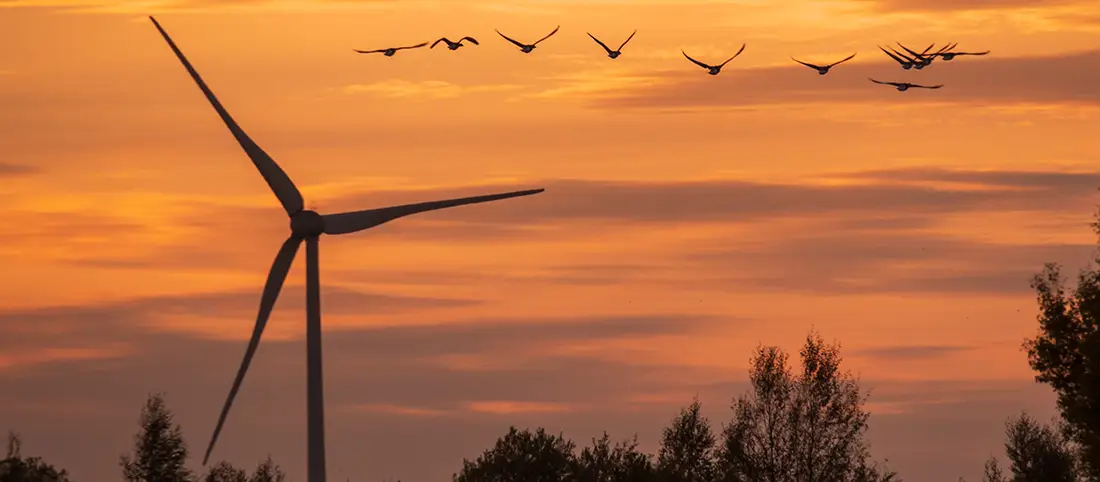
Lough Boora Discovery Park is a paradise for outdoor enthusiasts because it showcases the regenerating power of nature. With a little help from the caring hands and creative management of the dedicated team, we have turned Lough Boora from a vast industrial peat production landscape to a spectacular haven for animals, birds and plants.
The park is a diverse site largely comprising of cutaway bog with restored wetland and woodland habitats and it is teeming with the rich diversity of Irish wildlife. As the worked boglands have been transformed into habitats of high ecological value, so the species naturally occurring in Lough Boora have begun to increase.
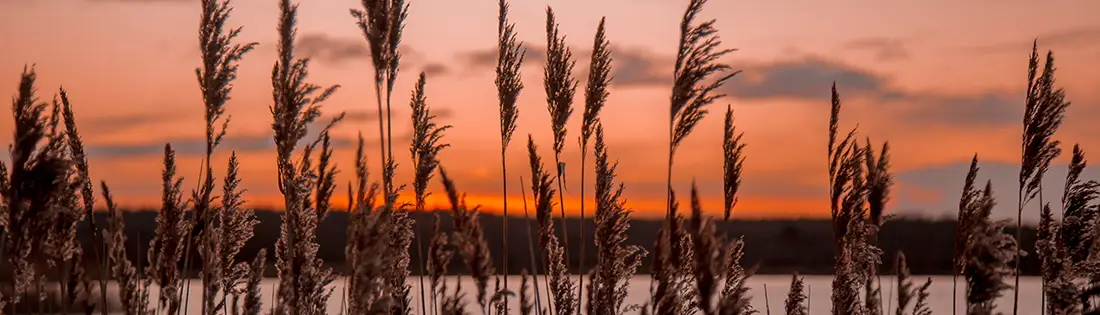
Vital to enhancing our national biodiversity resource is the wise use and management of cutaway bogs and related lands, and creating awareness of the local, national and regional value of biodiversity of peatlands.
Rehabilitation of the cutaway bogs generally involves measures to enhance natural re-colonisation, through activities such as drain blocking to create wetlands and other targeted practices such as tree planting, to create habitats that are appropriate to the characteristics of the site.
The main focus is on allowing the post-industrial peatland areas to naturalise and revert to wetland and dry wilderness areas. This process allows for the expansion and expression of biodiversity back onto the cutaway bogs and the creation of diverse and valuable habitats. While the former landscape was dominated by raised bog habitats prior to industrial peat production, the current and future cutaway landscape will be dominated by a diverse mosaic of wetland, Birch woodland, heathland and grassland habitats.
Rehabilitation can also be combined with the after-use development of peat production areas and cutaway bogs for land-uses such as renewable energy, industrial development, forestry, agriculture and amenity use, as well as biodiversity.
Areas that have been rehabilitated, such as Lough Boora, have been shown to provide a significant amount of ecosystem services including:
- the development of habitats with high biodiversity value and containing species of particular conservation interest;
- refuge areas for more common species under increasing pressure by various land-uses in the wider landscape; and
- areas for nature conservation and the provision of wildlife corridors.
Re-wetting cutaway also has the potential to develop carbon sinks in the future, helping to hold remaining carbon in the ground as well as providing services such as water filtration and regulation of flow. The development of drier areas of cutaway ultimately to Birch woodland has the potential to add a significant area to Ireland’s woodland resource, which is currently relatively low compared to European averages.
Please remember to respect the nature and conservation value of Lough Boora Discovery Park.
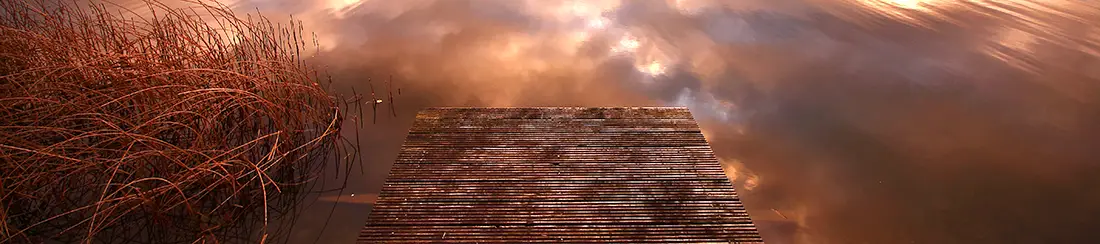
Some of Ireland’s rare and threatened wildlife species can be found at Lough Boora Discovery Park due to active rehabilitation and nature conservation. Some examples include Blue Fleabane and Alder Buckthorn, plant species considered to have a threatened status in Ireland.
The Dingy Skipper butterfly is another species that is relatively common in Lough Boora where there is suitable pioneer grassland habitat, but also has a threatened status in Ireland. The development of pioneer calcareous grassland where underlying glacial material has been exposed with its food-plant, Birdsfoot, is perfect for this species. Ground-nesting waders such as Lapwing and Redshank and songbirds such as Meadow Pipit and Skylark are now restricted in distribution in Ireland but make their home in Lough Boora. There is a wide range of other species of significant conservation value such as the White-clawed Crawfish and Hen Harrier, which can be found in the park.
The park’s amenities have become a haven for nature, with flora and both resident and migrant wildlife frequenting the lakes, wetlands, grasslands and woodlands. This enhanced programme of biodiversity has become closely linked to the after-use and rehabilitation of cutaway bogs.
Lough Boora is recognised as a key feature in the Offaly County Development Plan and includes:
- amenity and biodiversity;
- wetlands;
- a nationally and internationally recognised outdoor Sculpture Park; and
- a nationally important area for the last remaining population of Grey Partridge in Ireland.
Lough Boora Discovery Park is continually evolving and with the establishment of a Cycle Path and continuation of long-term bird surveys by Bird Watch Ireland to monitor use of the areas by species such a the Whooper Swan, Lapwing and a range of wetland birds.
Please remember to respect the nature and conservation value of Lough Boora Discovery Park.